

18 Dec 2025
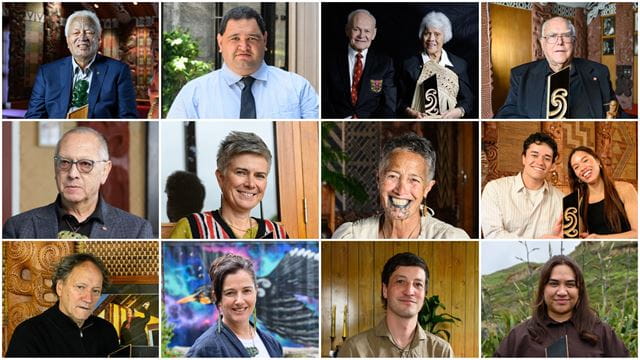
Creative New Zealand Toi Aotearoa is proud to announce the recipients of the 2025 Te Waka Toi Awards — the country’s longest-standing national celebration of Māori arts excellence. Since 1986, these awards have honoured the artists, cultural leaders and knowledge holders whose work strengthens our creative landscape and carries our stories forward.
This year’s awardees embody the depth, innovation and mana of ngā toi Māori, spanning lifetime achievement, creative leadership, and the next generation of ringatoi Māori emerging into their mana.
In 2025, the Te Waka Toi Awards have been presented under the kaupapa of hoki ki te kainga, within recipients own communities, marae and creative homes — ensuring this recognition is grounded where their mahi lives and breathes. Recipients’ stories are being shared through a series of short films and profiles.
These videos spotlight each artist’s achievements, kaupapa and contribution to Aotearoa’s cultural fabric.
Award recipients selected by Creative New Zealand have been honoured alongside awardees chosen by partner organisations Te Papa Tongarewa, Te Matatini and Te Taura Whiri i te Reo Māori. The 2025 recipients reflect the incredible breadth of Māori creativity — from leading practitioners shaping national artistic direction, to emerging storytellers forging new futures for our people and our narratives.
Haniko Te Kurapa, Senior Manager Te Kaupapa Toi o Aotearoa says presenting the awards is an uplifting experience.
“After 39 years, the Te Waka Toi Awards continue to uplift and celebrate the depth of ngā toi Māori. Each year we travel our rohe, strengthening hononga, receiving and giving manaakitanga, and contributing to the wider hāpori in ways that ripple beyond the moment. We celebrate our ringatoi who challenge, provoke kōrero, and expand how we think, feel, and engage through their mahi. These recipients carry Māori arts forward with confidence, purpose, and the strength of our values in their hono and manaakitanga.”
- Te Tohu Aroha mō Te Arikinui Dame Te Atairangikaahu – Supreme Award 2025:
Joe Harawira (QSM). A visionary storyteller, environmental advocate and cultural leader whose life’s work embodies mātauranga Māori, intergenerational care and the protection of our whenua.
- Te Tohu o Te Papa Tongarewa Rongomaraeroa – supported by Te Papa Tongarewa:
Professor Derek Lardelli (Tā Derek). One of Aotearoa’s most influential tohunga and multidisciplinary artists, recognised nationally and internationally for his profound contribution to Māori visual and performing arts.
- Ngā Tohu ā Tā Kīngi Īhaka – Lifetime Achievement Awards 2025:
Harata (Te Kani) Gibson. A cherished weaver, teacher and kairaranga whose decades of practice have nurtured countless emerging artists and strengthened the continuity of raranga traditions.
- Ngā Tohu ā Tā Kīngi Īhaka – Lifetime Achievement Awards 2025:
Reverend William (Bill) Nathan OBE, ED & Donas Nathan. A deeply interconnected pair of cultural leaders who have, together, upheld tikanga, revitalised ceremonial practice and shared a lifetime of service to iwi, hapū and community.
- Ngā Tohu Hautūtanga Auaha Toi – Making a Difference Award 2025:
Libby Hakaraia (MNZM). A powerful architect of Māori creative ecosystems, founder of Māoriland Film Festival, and a leader whose vision has opened pathways for Māori storytellers across generations.
- Ngā Tohu Hautūtanga Auaha Toi – Making a Difference Award 2025:
Clive Fugill. One of Aotearoa’s most esteemed master carvers and cultural leaders, dedicating nearly six decades to the revitalisation and protection of whakairo Māori.
- Ngā Tohu Hautūtanga Auaha Toi – Making a Difference Award 2025:
James (Jim) Moriarty (MNZM). A trailblazer of kaupapa Māori theatre whose Theatre Marae practice has transformed communities, nurtured generations of performers, and redefined the power of Māori storytelling.
- Te Tohu Iho Pūmanawa Award 2025:
Alan Tamaionarangi Moses. A gifted contemporary Māori artist whose creative voice emerges through a unique, non-verbal lens.
- Te Tohu Aroha mō Ngoi Kumeroa Pewhairangi – Award for Strengthening Te Reo Māori 2025:
Marlon Williams. For the groundbreaking success of He Whare Tīwekaweka and the documentary Marlon Williams: Ngā Ao e Rua, the first te reo Māori album to debut at #1 on both major national album charts — a landmark achievement in reo revitalisation through contemporary music.
- Ngā Manu Pīrere – Emerging Māori Artists 2025:
Hariata Moriarty & Tamati Moriarty. Siblings, founders of Hurō Productions, and bold emerging storytellers whose debut work Waenga signals a new generation of kaupapa Māori-led theatre — grounded in whakapapa, rangatahi voices and story sovereignty.
- Ngā Manu Pīrere – Emerging Māori Artists 2025:
Emma Hislop. An emerging Māori writer whose work is reshaping contemporary fiction through a distinctly Kāi Tahu lens.
- Ngā Manu Pīrere – Emerging Māori Artists 2025:
Te Ara Minhinnick. An emerging ringatoi who works deeply with uku and whenua in her art practice. Her mahi explores kōrero and ideas around people, space and place.
The 2025 Te Waka Toi Award recipients stand as a collective testament to the strength, diversity and evolution of ngā toi Māori. Their work spans traditional practice, screen, theatre, literature, language revitalisation, and community-centred innovation — each contributing to a vibrant, equitable and culturally confident Aotearoa.
Creative New Zealand Toi Aotearoa celebrates and acknowledges these exceptional artists, and the communities and whakapapa that uphold them, and move them forward.
Ngā mihi maioha ki ngā ringatoi, ngā kaitautoko, ngā kaiārahi — kua ū, kua tupu, kua puāwai ngā toi Māori i a koutou.
For media enquiries, interviews, and video use please contact:
Delilah Parore-Southon, Senior Communications Adviser - Māori
delilah.parore-southon@creativenz.govt.nz +64 22 173 8239
Te Waka Toi Recipients
Te Tohu Aroha mō Te Arikinui Dame Te Atairangikaahu Supreme Award
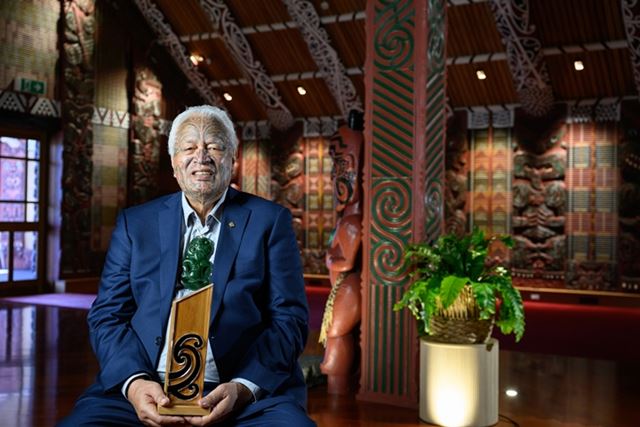
Joe Harawira
Ngāti Awa, Ngāi Te Rangi, Tūhourangi, Ngāti Maniapoto
Joe Harawira is a renowned storyteller, cultural leader, and advocate for te ao Māori whose life’s work has uplifted communities across Aotearoa and abroad. Beginning his journey as a teacher, Joe spent 25 years in education before joining Te Papa Atawhai Department of Conservation, where he continues to guide Treaty, iwi engagement and professional development work grounded in tikanga and whakapapa.
As an oral storyteller, Joe has carried the narratives of his people to audiences worldwide, embedding mātauranga Māori in every performance. Deeply committed to the performing arts, he has long served Te Matatini as a delegate and was honoured with Life Membership in 2018 for his immense contribution to kapa haka.
Joe’s cultural leadership extends across organisations including Air New Zealand, Save the Kiwi and Sustainable Seas, where he serves as Pou Tikanga. Joe also Chairs the ‘He Awhi Tikanga Committee, which is a team of expert knowledge keepers whom encompass and nurture the activities of Toi Maori. It is a forum premised upon tikanga maori within the Arts. After decades living and teaching in Waikato, he was ceremonially returned home to Taiwhakaea by Kiingi Tuheitia and Waikato-Tainui—a reflection of the esteem in which he is held. Today, Joe continues to champion kaupapa Māori, storytelling and intergenerational knowledge transmission with humility, heart, and unwavering dedication.
Ngā Tohu ā Tā Kīngi Īhaka Awards recognising a lifetime contribution to ngā toi Māori
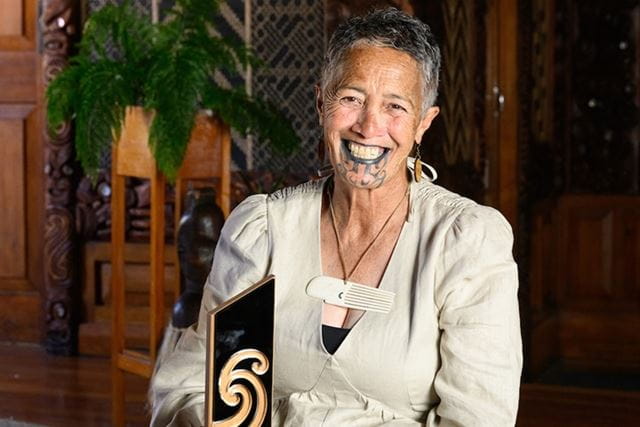
Harata (Te Kani) Gibson
Ngāti Porou, Ngati Oneone, Te Aitanga a Māhaki, Rongowhakaata, Ngāi Tāmanuhiri, Te Whakatōhea, Te Whānau a Apanui
Harata (Te Kani) Gibson is a deeply respected wahine rangatira of Te Tairāwhiti whose life’s work has strengthened the cultural, artistic, and social fabric of her people. Descended from the chiefly lines of Te Kani-a-Takirau, Charlotte carries a legacy of leadership that is evident in her decades of service as an artist, kapa haka exponent, cultural adviser, educator, and community advocate. She recently led her people, Ngati Oneone, through a successful 4 year campaign called Oneone ki te Whenua, which saw the return of lands taken during the 1920s, leaving Ngati Oneone landless.
For over 50 years, Harata has nurtured kapa haka across Tūranganui-a-Kiwa — performing, tutoring, composing and leading teams on regional and national stages. As Event Manager of the Tamararo Kapa Haka Competitions for 40 years, she has upheld one of the region’s most significant cultural events. She is also a long-time champion of Te Kōhanga Reo movement, revitalising waiata, tikanga and intergenerational mātauranga for mokopuna.
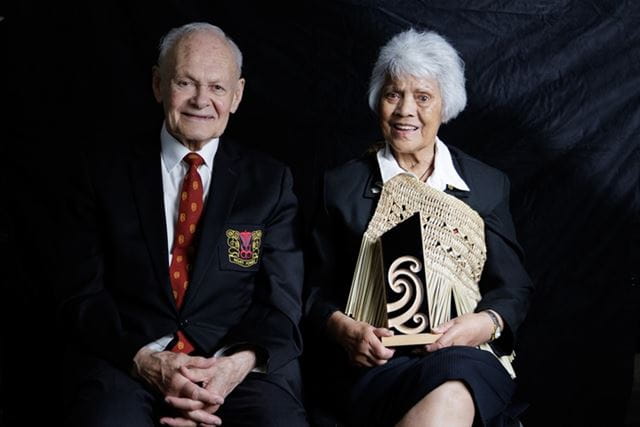
Reverend William (Bill) Charles Nathan OBE, ED and Donas Nathan
Te Atiawa, Ngāti Kahungunu, Ngāi Tahu; Whānau-ā-Apanui, Te Whakatōhea
Rev Bill and Donas Nathan are a remarkable partnership whose shared life of service has shaped Māori cultural, spiritual and community wellbeing across Te Whanganui-a-Tara and Aotearoa for more than six decades. Anchored in deep whakapapa ties — Bill of Te Atiawa, Ngāti Kahungunu and Ngāi Tahu, and Donas of Whānau-ā-Apanui and Te Whakatōhea — their combined leadership has uplifted generations.
Together, the Nathans opened their home and hearts to hundreds of children and young people through the Children and Young Persons Service, providing care, protection and aroha for over twenty years. Their longstanding involvement with the Ngāti Pōneke Young Māori Club has been equally transformative: both are Life Members, cultural anchors and mentors who have guided countless urban Māori in reconnecting with identity, reo and tikanga.
Bill’s distinguished military and civic career includes 29 years in the Territorial Force, senior command appointments, and his role as Officer of the Order of the British Empire (1984). From 1993–2005 he served as Gentleman Usher of the Black Rod and a member of the Vice-Regal Household. Donas, a pillar of strength beside him, has been central to their whānau-centred kaupapa and community outreach.
Spiritually, their shared commitment to the Anglican Church spans decades. Bill, ordained priest in 2017, serves in Te Hui Amorangi ki Te Upoko o Te Ika and on numerous church committees, while Donas remains an active and respected figure in parish and Māori Anglican life.
Through governance roles, cultural advocacy, pastoral care, and unwavering community service, Bill and Donas Nathan have shaped a legacy defined by manaakitanga, leadership, and deep devotion to their people. Their partnership stands as a shining example of collective service in action.
Ngā Tohu Hautūtanga Auaha Toi – Making a Difference
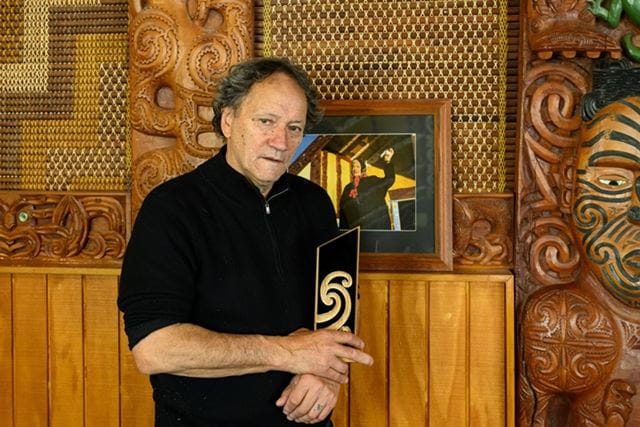
James (Jim) Moriarty MNZM
Ngāti Toa, Ngāti Koata, Ngāti Kahungunu, Rangitāne
James (Jim) Moriarty is a trailblazing Māori theatre-maker whose lifelong commitment to storytelling, healing and community transformation has reshaped the landscape of Māori performing arts. Raised at Takapūwāhia Marae in Porirua and recognised early by kaumātua for his talent, Jim emerged as a key figure in modern Māori theatre — from his early days with the Māori Theatre Trust and the founding of Taki Rua, to establishing Te Rākau Hua o te Wao Tapu (Te Rākau), Aotearoa’s longest-running kaupapa Māori theatre company.
For more than 35 years, Jim has led Te Rākau’s groundbreaking Theatre Marae methodology, integrating tikanga Māori, trauma recovery, pūrākau, political education and community collaboration. Under his direction, Te Rākau has delivered prison programmes, residential youth programmes, national tours and community co-created works that have uplifted thousands. His partnership with writer Helen Pearse-Otene has produced acclaimed works including The Undertow series, The Swing and Unreel — each confronting histories and contemporary crises with courage, hope and cultural depth.
A highly acclaimed actor, Jim is known for landmark roles in Michael James Manaia, Ngā Tangata Toa, Pūrāpūrawhetū, and screen performances spanning decades. His mentorship has nurtured generations of performers, creatives and whānau across Aotearoa.
Jim Moriarty’s leadership stands as a beacon of mana, compassion and transformative Māori theatre practice: a lifetime devoted to healing through the power of story.
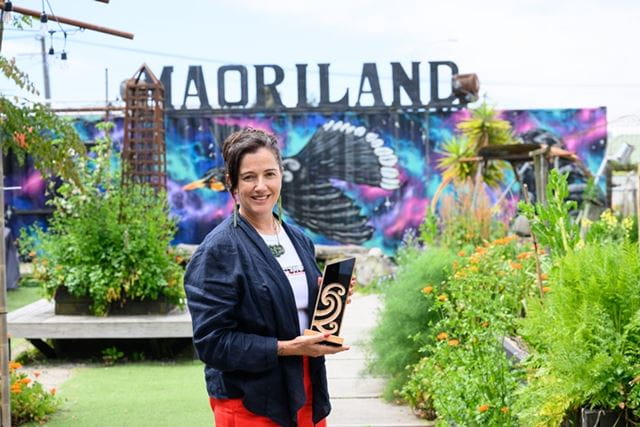
Libby Hakaraia MNZM
Ngāti Raukawa ki te Tonga, Ngāti Kapu, Te Atiawa
Libby Hakaraia is a visionary Māori storyteller, producer and creative leader whose impact on ngā toi Māori is felt across Aotearoa and around the world. A writer, director and longtime advocate for Indigenous cinema, Libby has dedicated her career to building pathways for Māori artists to flourish across screen, digital media, visual arts and community-based creative development.
She is the founder of the Māoriland Film Festival — now the largest Indigenous film festival in the world — and the driving force behind the Māoriland Hub, Toi Matarau Gallery and the Toi Matarau Artist Residency. Through these initiatives, Libby has nurtured a thriving ecosystem where Māori creatives of all ages can learn, collaborate and lead. Her championing of tamariki and rangatahi through programmes like Te Ara Toi, MATCH (Māoriland Tech Creative Hub) and Ngā Pakiaka has supported hundreds into careers in film, animation, design and performing arts.
An award-winning screen practitioner, Libby has directed and produced dozens of documentaries and arts series, and is the architect of the global Indigenous filmmaking initiative Native Slam. She received the Merata Mita Fellowship (2023) and was appointed MNZM in 2022 for her services to media and film.
Grounded in tikanga and committed to intergenerational leadership, Libby Hakaraia continues to shape a future where Māori storytelling is visible, connected and celebrated on the world stage.
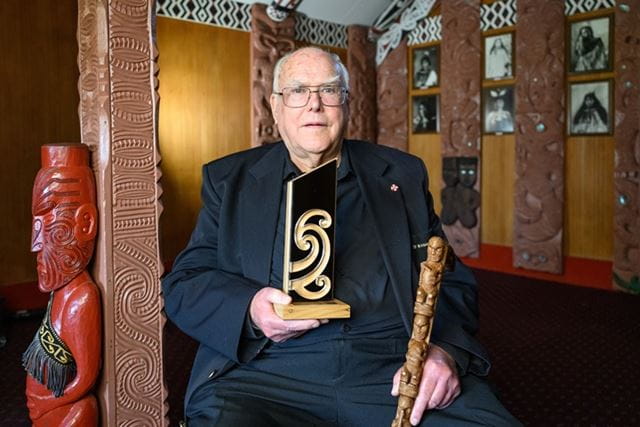
Clive Fugill CNZM
Ngati Ranginui; Ngai Te Rangi
Clive Fugill is one of Aotearoa’s most esteemed master carvers and cultural leaders, dedicating nearly six decades to the revitalisation and protection of whakairo Māori. Beginning his journey carving with a pocketknife in a woodshed, Clive was part of the inaugural 1967 intake at the New Zealand Māori Arts and Crafts Institute—now Te Puia—where he rose to become Tohunga Whakairo of the National Wood Carving School.
His artistry is marked by exceptional technical mastery and deep adherence to tikanga with works embedded in marae, public spaces, and international collections. Equally influential is his role as a teacher and mentor, having guided hundreds of tauira to reconnect with whakapapa, identity, and cultural practice through whakairo. His works are embedded in marae, public spaces, and international collections.
Clive’s scholarship, including his seminal publication Te Toki me te Whao, has preserved essential knowledge of traditional tools and carving philosophy for future generations. A Companion of the New Zealand Order of Merit (2024), his leadership spans governance roles, cultural advocacy, and global cultural exchange.
Respected for his humility, integrity, and commitment to mātauranga Māori, Clive’s legacy is carved not only in wood, but in the many hands and hearts he has inspired.
Te Tohu Iho Pūmanawa - recognising the contribution of a tangata whaikaha, turi Māori, Deaf or disabled Māori artist
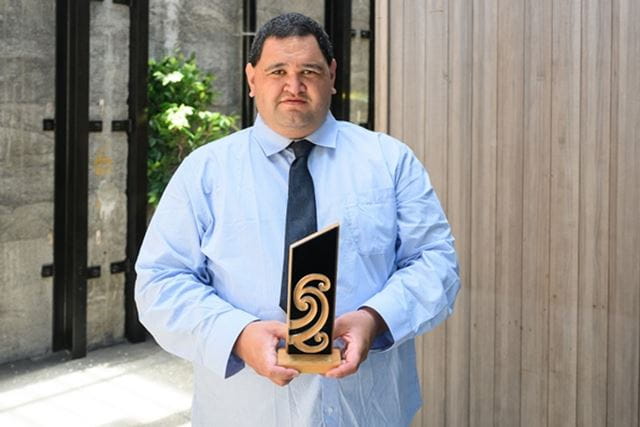
Alan Tamaionarangi Moses
Tūhoe, Ruapani ki Waikaremoana
Alan Tamaionarangi Moses is a gifted contemporary Māori artist whose creative voice emerges through a unique, non-verbal lens. Alan has spent his life communicating the depth of his emotions, experiences, and worldview through art. His practice blends curvilinear forms inspired by koru and poupou with rectilinear motifs drawn from tukutuku, creating works that honour mātauranga Māori while expressing his own visual language.
A graduate of Toihoukura under the guidance of Tā Derek Lardelli and Steve Gibbs, Alan continues to refine his craft through painting, digital design, and the creation of harakeke paper. Based in Waimako, Waikaremoana, he works from his home studio and exhibits through his private gallery in Wairoa.
Alan’s recent exhibition Waipuke (2024) captures the impact of the region’s devastating floods, offering powerful reflections on whenua, water, and resilience. His works—rich in symbolism, movement and wairua—have resonated widely, affirming his place as an artist with a distinct and important voice. Alan’s practice exemplifies the essence of Te Tohu Iho Pūmanawa: innate talent, deep cultural grounding, and an extraordinary ability to communicate through the power of toi Māori.
Ngā Manu Pīrere – recognising emerging Māori artists showing promise and potential in their chosen artform
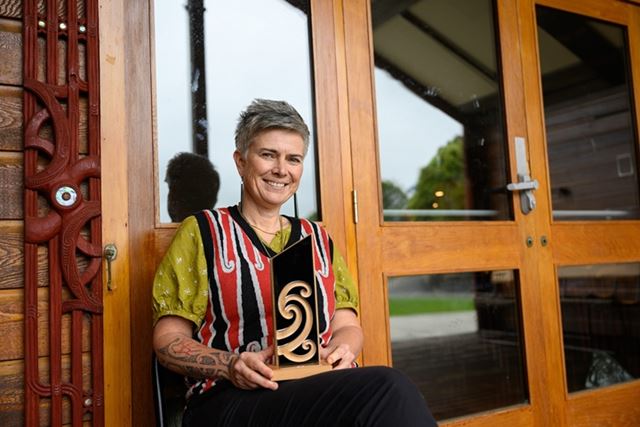
Emma Hislop
Kāti Māmoe, Waitaha, Kāi Tahu
Emma Hislop is an emerging Māori writer whose work is reshaping contemporary fiction through a distinctly Kāi Tahu lens. Based in Taranaki with whakapapa to Puketeraki in Ōtepoti, Emma’s writing navigates identity, memory, time, and the layered realities of te ao Māori. Her debut book Ruin (2023) received critical acclaim and won the Hubert Church Best First Book of Fiction at the 2024 Ockham New Zealand Book Awards.
A recipient of the Arts Foundation Springboard Award, Emma has been mentored by Patricia Grace, with whom she has held wanaka that continue to shape her creative and cultural practice. Her current novel-in-progress embeds mātauraka Māori through language, whakapapa, characterisation and an exploration of Māori concepts of time and place, weaving experiences from Ōtepoti, Taranaki and London.
Emma’s commitment to community is evident in her relationships within Te Hā Taranaki and her mentoring of emerging Māori writers through Te Kaituhi Māori. With works published across Aotearoa and internationally, she is recognised as a powerful new voice whose writing reclaims, reconnects and reimagines Māori narratives for future generations.
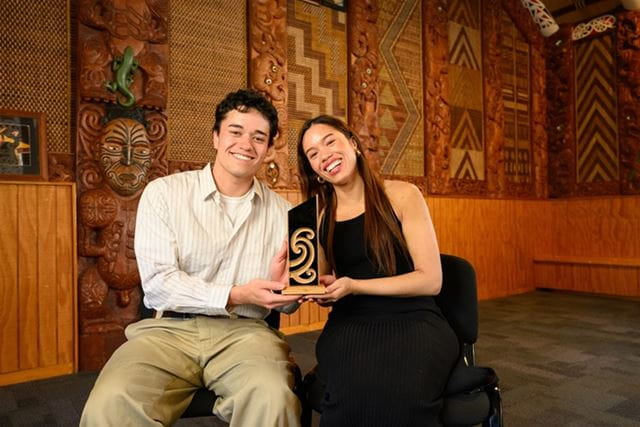
Hariata Moriarty and Tamati Moriarty
Ngāti Toa Rangatira, Ngāti Koata, Ngāti Kahungunu ki Wairoa, Ngā Puhi
Hariata and Tamati Moriarty are emerging Māori creatives whose growing body of work reflects a powerful combination of lived experience, artistic vision and deep commitment to kaupapa Māori storytelling. Raised within the world of Te Rākau Hua o te Wao Tapu and immersed from childhood in Theatre Marae practice, the siblings bring a uniquely intergenerational understanding of creative work as a tool for healing, identity and transformation.
Together, they have recently founded Hurō Productions — a new platform dedicated to self-determined Māori storytelling across theatre, screen and music. Their debut work Waenga, written and performed by both Hariata and Tamati, marked their transition from performers to creative leaders. Developed through wānanga with rangatahi and grounded in tikanga-based processes, Waenga explores themes of whakapapa, tino rangatiratanga and intergenerational healing. The work toured as part of Kia Mau Festival 2024 and was shared with secondary schools across Te Whanganui-a-Tara, resonating deeply with young Māori audiences.
Hariata, an actress, writer and producer currently completing a Master’s in Māori Laws and Philosophy, brings a strong intellectual and cultural framework to their storytelling. Tamati, a writer, performer and producer with experience across stage and screen, contributes a grounded understanding of rangatahi, whanaungatanga and creative wellbeing.
Through Hurō Productions, the Moriarty siblings are building a distinct kaupapa Māori-led creative pathway. Their work is bold, accessible and future-focused — reaffirming the power of Māori stories told by Māori, for Māori, and signalling a new generation stepping forward with clarity, purpose and mana.
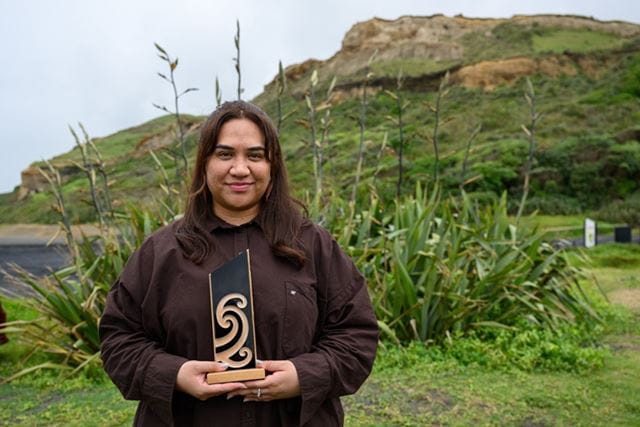
Te Ara Minhinnick
Ngaati Te Ata Waiohua
Te Ara Minhinnick lives in Waiuku, nestled along the southwestern edges of Tāmaki Makaurau, where three ancestral waterways converge — Te Awa o Waikato, Te Mānukanuka o Hoturoa, and Te Tai o Rēhua. Her practice is shaped by an intimate, embodied relationship with these moana and awa. Following their shorelines, she gathers uku, whenua, and onepū, engaging directly with the material whakapapa of place.
Through these acts of collection and making, Te Ara re-presents whenua as both witness and teacher — a site of evidence, a vessel of memory, and a living ancestor to whom obligations remain. Her work brings forward the presence, histories, and ongoing narratives of her iwi, Ngāti Te Ata, grounding contemporary art within the enduring responsibilities of kaitiakitanga, whakapapa, and whenua.
Te Tohu o Te Papa Tongarewa Rongomaraeroa – Outstanding contribution to Ngā Toi Māori
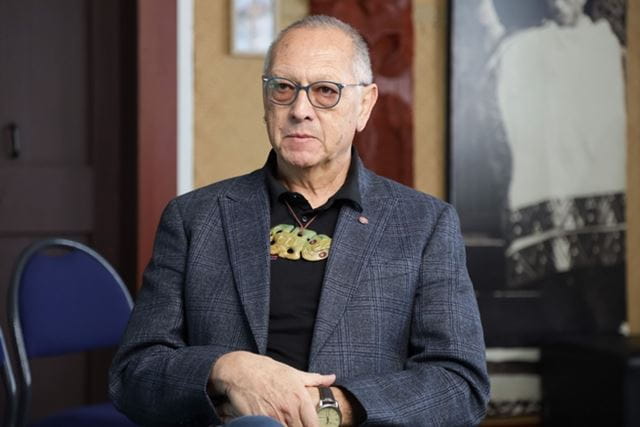
Tā Derek Lardelli
Ngāti Porou Ngāti Konohi, Rongowhakaata Ngai Te Aweawe
Tā Derek Lardelli is one of Aotearoa’s most influential tohunga and multidisciplinary artists, recognised nationally and internationally for his profound contribution to Māori visual and performing arts. A master of tā moko, mixed-media artist, painter, kapa haka exponent, composer and scholar, his practice is anchored in whakapapa, Tairāwhiti tikanga and the marae communities that shaped him.
As Ahorangi and mentor at Toihoukura, he has guided generations of artists, embedding mātauranga, ritual and kōrero tuku iho into contemporary creative practice. His leadership has been central to the revitalisation of tā moko and the protection of cultural knowledge, including international repatriation efforts.
A laureate, supreme Matariki Award recipient and Arts Foundation Laureate, Tā Derek has represented Māori art on global stages—from Gallipoli and San Francisco to Notre Dame University—while completing major national design commissions such as the Hikurangi Māui sculptures and the C Company Memorial House (28th Māori Battalion).
A prolific composer, he has shaped the soundscape of modern kapa haka and created haka including Kapa o Pango for the All Blacks. Knighted in 2020 for services to Māori art, Tā Derek continues to be a cultural torchbearer whose mahi illuminates pathways for future generations.
Te Tohu aroha mō Ngoi Kumeroa Pewhairangi: “Whakarongo, Titiro, Kōrero” - Award for strengthening Te Reo Rangatira
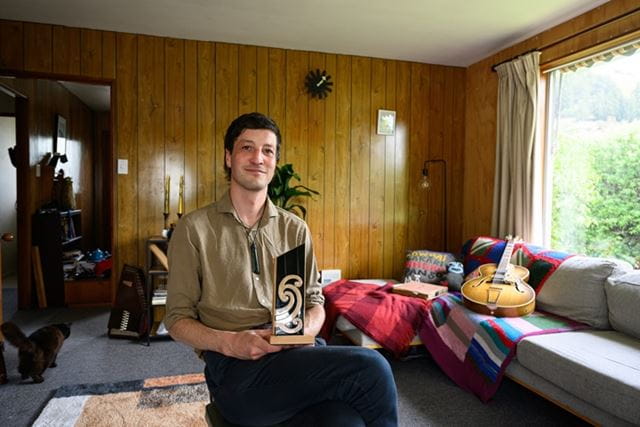
Marlon Williams
Ngāi Tai ki Tōrere, Kai Tahu
Marlon Williams is a celebrated musician and storyteller whose recent te reo Māori work has made a profound impact across Aotearoa and the world. With his debut reo Māori album He Whare Tīwekaweka, Marlon stepped into a new creative chapter — one grounded in aroha for Ngoi Kumeroa Pewhairangi and a deep commitment to language revitalisation. The album sparked widespread attention, resonating across generations and reaching audiences far beyond Aotearoa.
Within a week of its release, He Whare Tīwekaweka made history as the first te reo Māori album to debut at #1 on both the Official Top 40 Album Chart and the Official Aotearoa Top 20 Album Chart, affirming its cultural and artistic significance.
This creative journey was captured in the feature documentary Marlon Williams: Ngā Ao e Rua, which had a nationwide cinema release in May 2025. The film earned critical acclaim for its emotional honesty, depth, and celebration of Māori language and identity. Reviewers praised it as a beautifully executed work that keeps te reo Māori alive and thriving.
Marlon’s artistry continues to bridge worlds — weaving whakapapa, music and storytelling to uplift te reo Māori on a global stage.