


05 Dec 2025
The Shanghai Biennale is one of Asia’s most significant contemporary art events, an opportunity for artists’ work to be seen in an international context. The Biennale title, ‘Does the flower hear the bee?’ is inspired by the scientific discovery that flowers respond to the vibration of honeybees’ wings. The selected works explore the intersection of different ways of sensing the world around us and orienting ourselves to the future.
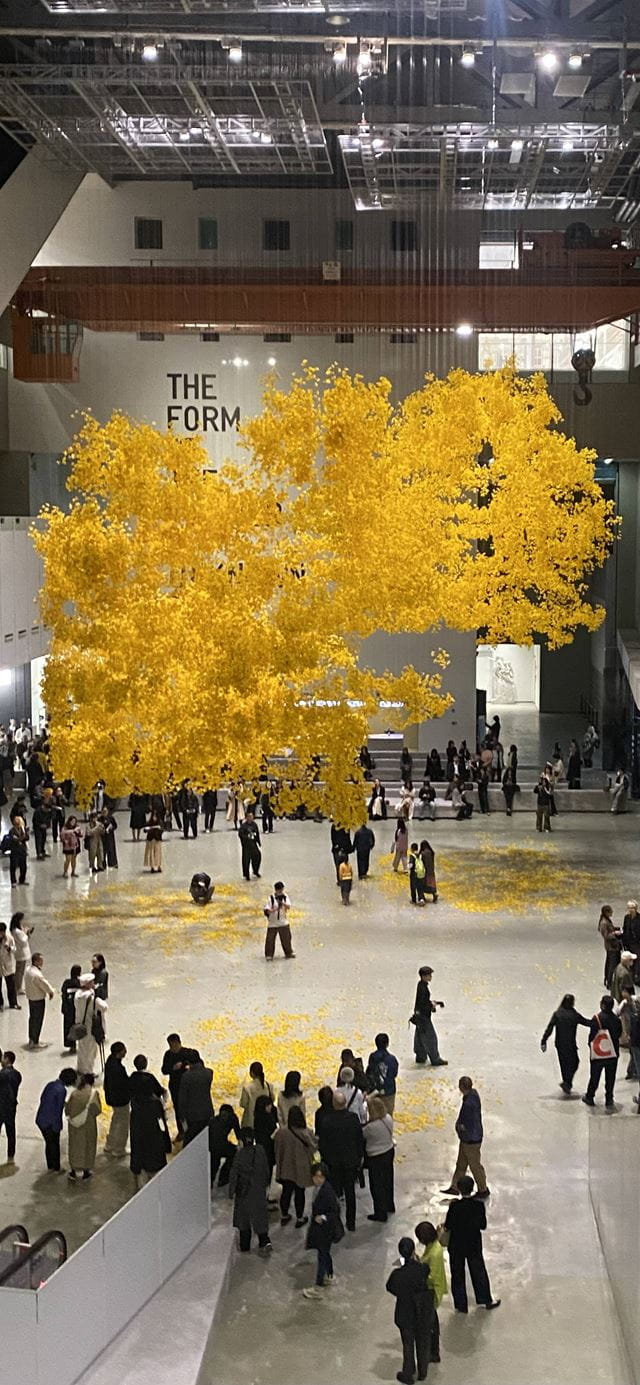
Canadian curator Kitty Scott, the first woman to be appointed as artistic director for the Biennale, led the selection of works that aligned with this theme.
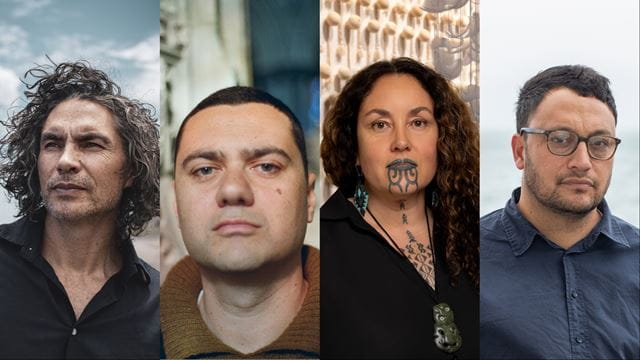
Following a research visit to Aotearoa, Kitty selected four artists: Brett Graham (Ngāti Koroki Kahukura, Tainui), Ngahina Hohaia (Taranaki iwi, Te Atiawa, Ngāti Ruanui, Ngāti Mutunga, Parihaka), Shannon Te Ao (Ngāti Tūwharetoa, Ngāti Wairangi, Ngāti Te Rangiita, Te Pāpaka-a-Maui), and Luke Willis Thompson. Speaking of the four, Kitty says, "These artists are bringing forward the importance of an interconnected sphere and strong community bonds in a time of great uncertainty."
This is the first time that artists from Aotearoa have been invited to participate in the curated exhibition, which has been running for 30 years.
Kitty Scott’s visit was initiated by the Office for Contemporary Art Aotearoa (OCAA) working with independent curator and writer, Gregory Burke and HU’s Art, an arts organisation working between Auckland and Shanghai. Together, they saw Kitty’s appointment as an opportunity – recognising that the best way to get New Zealand artists to Shanghai was to invite Kitty to New Zealand to meet our artists and see their work.
"Everything the Office (OCAA) does is in partnership with others, ensuring that expertise from across the visual arts sector is appropriately engaged in each and every project. OCAA never does anything alone, and certainly should never be a gatekeeper," says Stephanie Post, founder and director of OCAA.
With communications open, the next step was getting funding together for Kitty’s visit.
"We did a kind of grown-up crowdfunding, and asked a few people whether they might support a visit, and Dame Jenny Gibbs, Jenny and Andrew Smith, Michael Lett Gallery and Ngaere Duff and Kent Gardner all said, yes – and the Park Hyatt Auckland very generously offered accommodation" Stephanie says.
The resulting itinerary, developed by Gregory Burke in consultation with Kitty and with other curators in Aotearoa, was a five-day whirlwind of studio visits, curator meetings and networking events, through which Kitty met around 30 artists. The visit didn’t come with guarantees or promises, but Kitty decided to invite four artists whose work spoke to her vision for the Biennale.
“These works embody Indigenous ways of knowing and being which includes a larger sense of community and the invisible interconnections between people. These artists are bringing forward the importance of an interconnected sphere and strong community bonds in a time of great uncertainty. This diverse array of intelligences and abilities to sense the world around us give rise to a more hopeful vision, one where art orients us towards the unknown future,” Kitty says.
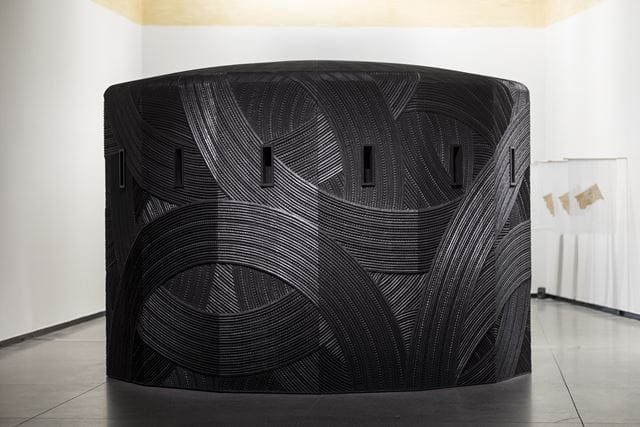
Brett Graham’s work, Ka Wheeke (2024) stands at the opening of the Biennale exhibition, responding to stories of militarization, imprisonment, and resistance. Kitty responded to the way it brings the environment to the forefront and sees it as a monument that “listens and remembers”.
“I was drawn to the ways in which it resists and recalibrates, drawing on the powerful currents of the Waikato River and the bodies of the tuna (eel),” Kitty says.
All four of the artists were able to attend the opening of the Biennale, to see their work in that international context and to meet with other artists. Brett Graham recognises the potential of the experience.
“The opportunity to exhibit at the Shanghai Biennale […] and be able to view work by extraordinary artists from around the world will prove to be most beneficial to my practice. It has also been a privilege to exhibit alongside Ngahina Hohaia, Shannon Te Ao and Luke Willis Thompson,” Brett says.
Luke Willis Thompson echoes this, referring to the camaraderie between the artists.
“I also felt very proud to be part of the contingent of artists from Aotearoa, who supported and turned out for each other publicly across the week and its many associated events,” Luke says.
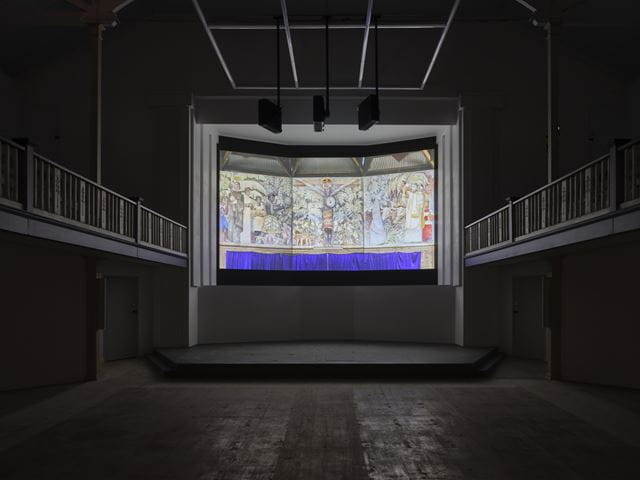
Luke’s work Mouvement des Malades (2024) connects the climate crisis and historical trauma and colonial legacies globally – in Algeria and Fiji. The work has three elements: a recreation of a chart by Algerian psychiatrist and philosopher Frantz Fanon as he trialled seven patients on toxic amounts of lithium; a three-channel video showing the mural Black Christ and Worshippers by Jean Chalot, painted in 1962 for the Church of St. Francis Xavier in the village of Naiserelagi in Ra (Fiji); and a soundscape of intense rain over traces of village life.
The works by Shannon Te Ao and Ngahina Hohaia shift the focus to the ways people connect with each other.
Shannon Te Ao has a series of photographic works on display, Te pōtiki o te ao (2024). In the Biennale catalogue, Shannon translates this to “the smallest in the world,” explaining this is a play on the name of one of his children.
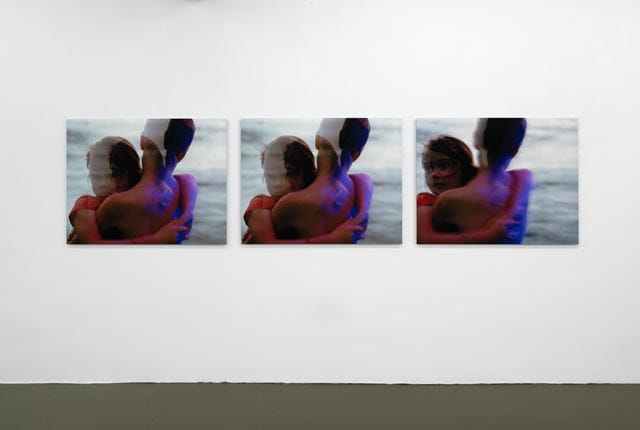
For Kitty, the work picks up on the strong thread in the exhibition that focuses on the lives of children.
“Shannon's photographs show the bonds between brothers and sisters and speak to family relations against the backdrop of the ongoing struggles of te ao Māori,” Kitty says.
Shannon met with the New Zealand business community in Shanghai, encouraging them to look at the exhibition and feel the power of the works.
“There is no shying away from the politics, the problems, and the pride that are connected to our place, and on the back of that we (Aotearoa) get to look awesome on the world stage and we all get to share in a narrative that is as complex as it is beautiful,” Shannon says.
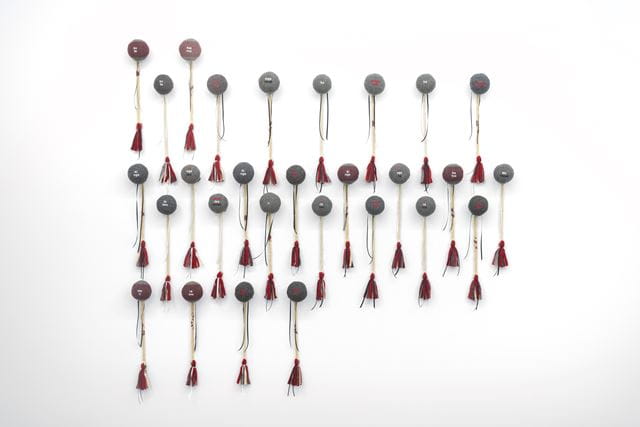
Ngahina Hohaia’s work addresses that complexity, looking at the persistence of colonial violence alongside resistance, restoration, and renewal. Article 2 (2025) is a poi installation, made with woollen blankets that were a feature of the settler economy. The stimulus for the work came from the need to be heard.
“I was unable to join the recent Toi Tu Te Tiriti hikoi to parliament in November last year [2024] - so this new work was the expression of my contribution to the momentum and voice of a record groundbreaking number of tangata whenua and tangata tiriti calling for Te Tiriti to be honoured as the foundation of our nation,” Ngahina says.
The New Zealand artists are four of 67 represented in the Biennale, with more than 250 works on display. Gregory Burke, who invited Kitty and developed her research itinerary with her, says the outcome has been positive.
“The biennale's deft curatorship has produced a remarkably cohesive thematic arc, culminating in an exhibition that feels both powerful and timely. No less striking are the Aotearoa artists, whose works easily hold their own within an impressively strong international line-up,” Gregory says.
The 15th Shanghai Biennale opened on 8 November 2025 and continues until 31 March 2026 at the Power Station of Art, Shanghai.
Creative New Zealand is happy for you to share the link to this article on your channels.
The Office of Contemporary Art Aotearoa Trust (OCAA) formed in 2024 to support visual arts practitioners from New Zealand form international connections and present work at major overseas exhibitions. OCAA is based in Tāmaki Makaurau Auckland and works throughout Aotearoa New Zealand and overseas.
In addition to initiating and supporting Kitty’s visit to Aotearoa, OCAA was instrumental in engaging the NZ Ambassador to China, the NZ Consulate in Shanghai, New Zealand Business Roundtable in China and Kea New Zealand with the participation of the artists from Aotearoa in the Biennale.
The Govett-Brewster Art Gallery | Len Lye Centre also supported the project, enabling Taarati Taiaroa, Ringahāpai Kaitakatū Ngā Toi Māori | Curator Contemporary Māori Art, to work with Ngahina towards her presentation in Shanghai and to travel to Shanghai to support all the artists during installation.
Creative New Zealand provided $30,400 to support travel costs for the four artists and their work. The funding was through the International Presenters Fund 2025 (round 1) following an application from Chen Weng on behalf of Power Station of Art, home of the Shanghai Biennale.
Additional funding came from a partnership between the Biennale and The True Honey Co. supplier of Manuka honey from New Zealand, co-branded for the Biennale gift shop.
The Power Station of Art, Shanghai also made significant financial contributions to the project, covering artist fees, exhibition costs, catalogue production, and additional freight costs etc. This contribution from the Biennale represented over 70% of the total cost of showing work by the four artists from Aotearoa.
In Aotearoa, Ngahina Hohaia’s work is shown by Tim Melville Gallery, while Luke Willis Thompson and Shannon Te Ao are represented by Coastal Signs, and Brett Graham is represented by Gow Langsford Gallery.