

15 Sep 2025
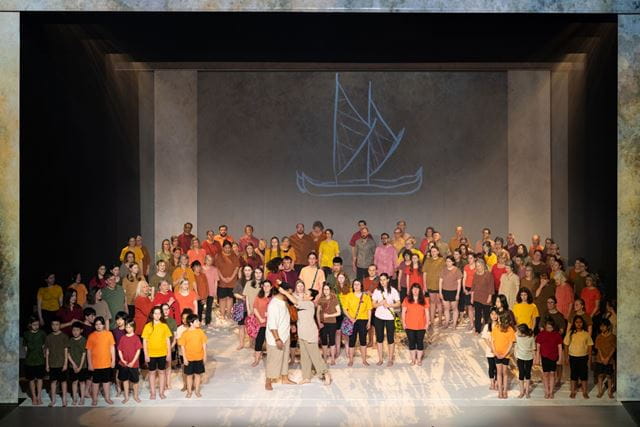
By the time NZ Opera’s season of The Monster in the Maze finishes in Auckland on Sunday 20 September, a total of 605 participants will have been involved in the production in Ōtautahi Christchurch, Te Whanganui-a-Tara Wellington and Tāmaki Makaurau Auckland.
That’s the sum of child, youth, and adult community choruses in three cities, in addition to the community musicians joining the orchestras and the core cast of professional singers, creatives, and crew.
This story gives three perspectives on this multi-faceted project.
The NZ Opera perspective
Joanne Cole, Director of Artistic Planning and Participation is always thinking about how the company folds in new people and develops audiences in ways that aim to foster meaningful and enduring engagement.
How does community-centric opera help build relationships?
We're really seeking something deeper, so we consider what that might look like in every element of our work. What does it look like for us to be a Treaty partner in our space, in our art form? People often talk about reimagining the art form, or reimagining stories. We talk about relevancy, we talk about impact, and we pursue excellence. But alongside that, what does community collaboration look like, here, in opera? We often refer to the fact that we are simply telling stories through the power of human singing voice. In my view, there’s nothing better!
Why did you choose The Monster in the Maze?
The opera is a community-centric work by composer Jonathan Dove and librettist Alasdair Middleton. Since its debut in London in 2015, it’s been performed across Europe, in Taiwan and in the United States, so it offered the security of having met great success in multiple countries and languages. But it didn’t come with a guidebook to what community-centric opera looks like in Aotearoa New Zealand, across three cities.
How long has this taken to get off the ground?
The project has been a year in the planning and meant finding solutions for reaching community singers, how to rehearse remotely, how to costume 600 people, how to partner with three orchestras and how to stay true to being about community engagement.
Who is involved?
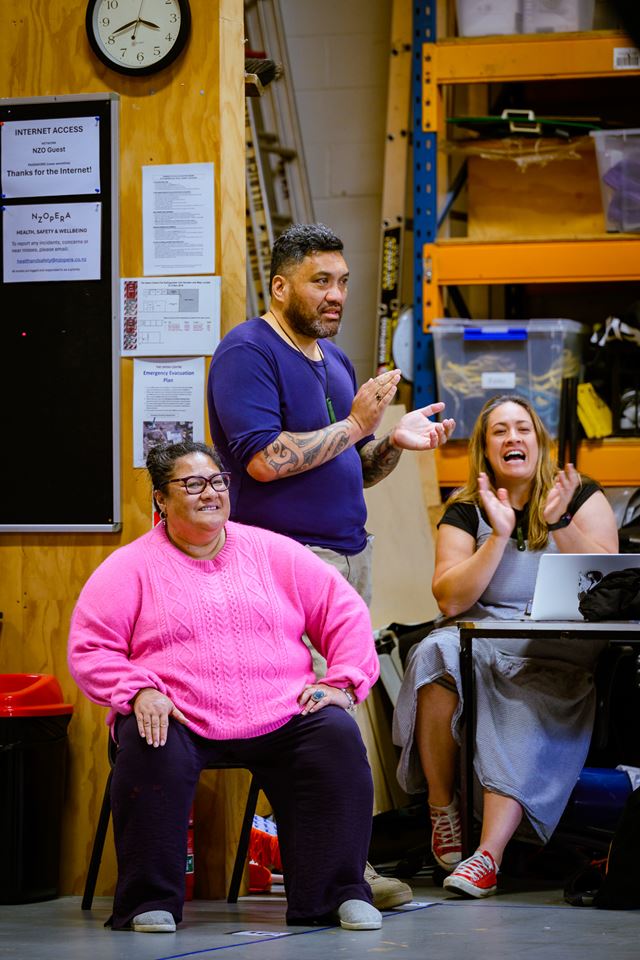
We have Anapela Polata’ivao directing, which has really resonated with people with the success of the film ‘Tinā’. Stacey Leilua is creative producer, helping galvanize the connection with community. Our production design is by Filament Eleven 11, and we have the wonderful Sophie Ham as our indefatigable head of wardrobe.
All these elements mean the community choruses have the total production experience, along with the chance of working with professional singers. The four key roles are played by Sarah Castle (Mother), Joel Amosa (Daedalus), Ipu Laga’aia (Theseus) and Maaka Pohatu (Minos).
Our music forces are led by conductors Brad Cohen and Brent Stewart, with professional and community musicians from the Christchurch Symphony Orchestra, the NZSO, and the Auckland Philharmonia.
What do people get out of it?
Most people at the beginning said ‘I'm so nervous, I've never done anything like this before’ like a moment of confession. Once they arrive, and then get to the end of performance, you see them so buoyant, so uplifted. They come to us and say, ‘That was so much better than I thought it might be’ or ‘I'm so proud that I did this or ‘I don’t want this experience to end!’ That’s something I'm always looking for, how we can measure and assess impact.
The conductor’s perspective
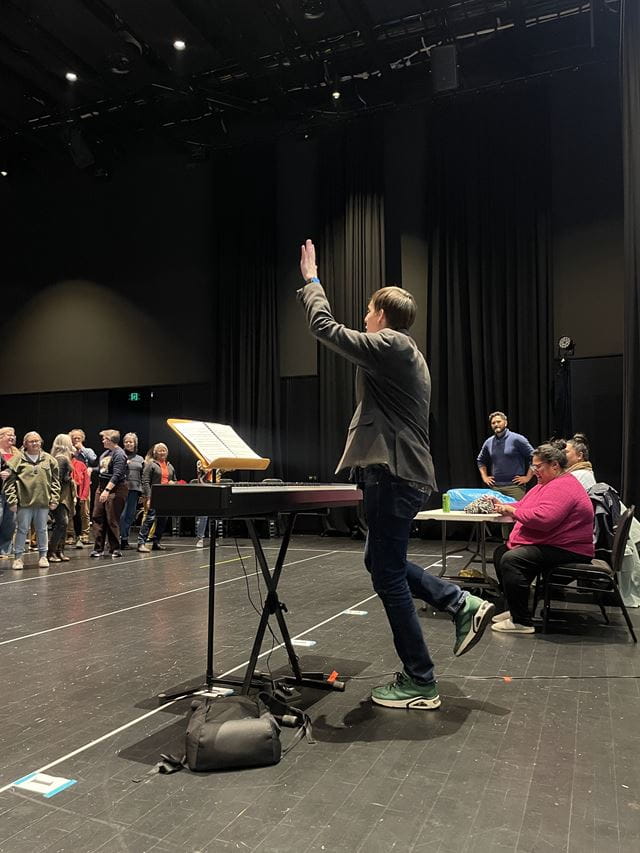
Brent Stewart rehearsed the community singers in Christchurch, Wellington and Auckland. He conducts the NZSO in Wellington and the Auckland Philharmonia in Auckland for The Monster in the Maze. He is also the 2025 NZ Opera Friedlander Foundation Associate Artist.
The community singers rehearsed using a digital learning tool created on the contexts.live platform and brought to the fore online rehearsal techniques Brent first became familiar with during the COVID-19 pandemic.
What is the benefit of this technology for a community project?
COVID-19 was a huge turning point for everyone. It pushed the arts world to develop new ways of connecting and learning remotely. Many of the tools and habits created during that time have stayed with us because they work so well. Digital resources are freeing singers from the limitations of geography or schedule. It is not about replacing in-person rehearsals, but about giving singers confidence before they even walk into the room.
What do the community singers experience when they do a digital rehearsal?
We’ve developed a tool for them to use in their own time and place; it’s a purpose-built learning resource that combines several elements. They can watch a video of a conductor, hear their chosen voice part in the mix, read the text, and follow a scrolling score, all perfectly synchronised. What the screen gives us is preparation, clarity, and confidence. By the time we meet face to face, singers already know the music, so we can immediately focus on ensemble, expression, and storytelling.
The community choruses are in three age groups, is there a generational difference in response to digital rehearsal?
Yes, there are some differences. Younger people tend to pick up things like new software quickly, although children, particularly, still need caregivers to help with access. Older singers may be less familiar with this kind of tool at first, but the design is very intuitive. Once people understand that they can press play, follow the score, and select their part, it becomes very straightforward. The aim has always been to make the resource as accessible as possible to all ages.
What happens when you finally get to rehearse in person?
The magic always happens when we come together in person. Singing alone with a track at home is a critical step, but it is very different from singing in an ensemble where your part is woven into a larger sound. That shift requires listening, flexibility, and a sense of shared rhythm and breathing. The resource gives singers the groundwork so that when we do gather, the rehearsal process accelerates, and the performance can rise to a much higher level.
To your experienced ears, what do you hear in a community chorus that you do not hear in seasoned performers?
Community choruses bring a unique sound. It is less polished, but it has a kind of freshness and authenticity. There is an honesty in hearing everyday people lift their voices together that you cannot always replicate with trained professionals. This feels real, as if the community itself has broken into song, and that quality is especially powerful in a work like The Monster in the Maze.
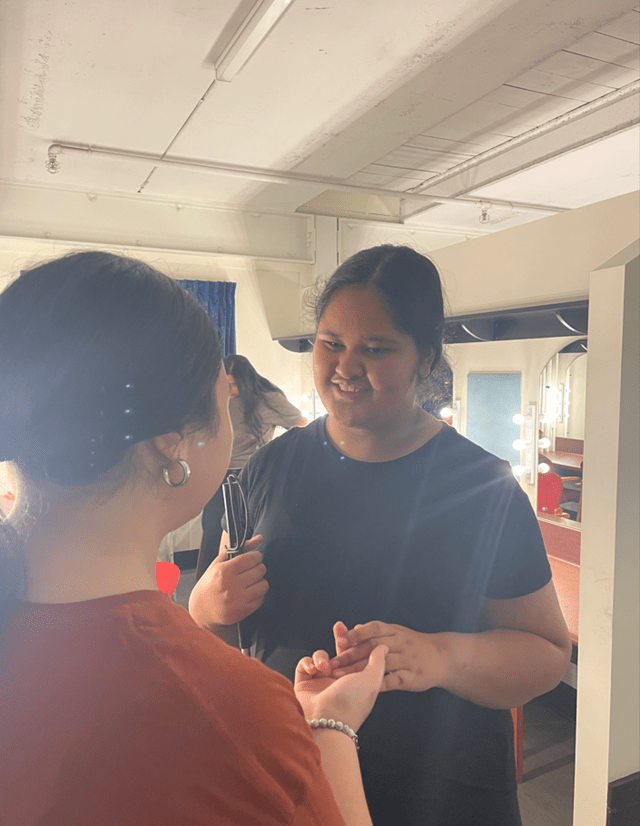
A community singer’s perspective
Ana Cooper-Fuauli is a 13-year-old visually impaired teen from Levin, who usually sings with her local choir, the Unison Community Choir.
How did you find out about this opportunity?
My choir Unison was asked if they wanted to join in on this community opera, and mum signed me up.
What sort of singing do you usually do?
I sing with my choir Unison, and I also sing in my church choir. I sing alto.
What attracted you to being a part of this?
After the first rehearsal I thought it was too hard, and I was not used to this kind of singing! But Mum said to keep practicing. I started to enjoy it once I learnt it, and I’ve gotten better and now I’m so excited to perform opera.
How have you managed rehearsals without the lead singers?
After I learnt the alto line, Mum would play the soprano part and I would listen for the beat for when to sing the alto part, using the online recordings. She would let me know who was singing during the lead's instrumental parts.
What has surprised you about the experience?
I thought opera was like a choir, just singing songs. I didn’t know it was a story being told through singing and after my first rehearsal I understood something about a mean King and a Minotaur. That’s when I asked what we were singing about and really got into the story.
How much of a hard sell was it to get friends and family to come and watch the opera?
I have 12 family members coming to both performances, and it wasn’t hard to sell it to them, because I’m the oldest grandchild and the favourite!
They get excited to see me do things, but they know they can’t cheer because it distracts me, but sometimes they don’t listen! I always have family come to watch me so when they heard I was going to perform onstage in an opera, oh, were they excited.
NZ Opera's season of The Monster in the Maze will be at the Kiri Te Kanawa Theatre 19-20 September with participants from the Tāmaki Makaurau community.
NZ Opera receives funding from Creative New Zealand through the Toi Uru Kahikatea investment programme.