

22 Jun 2026
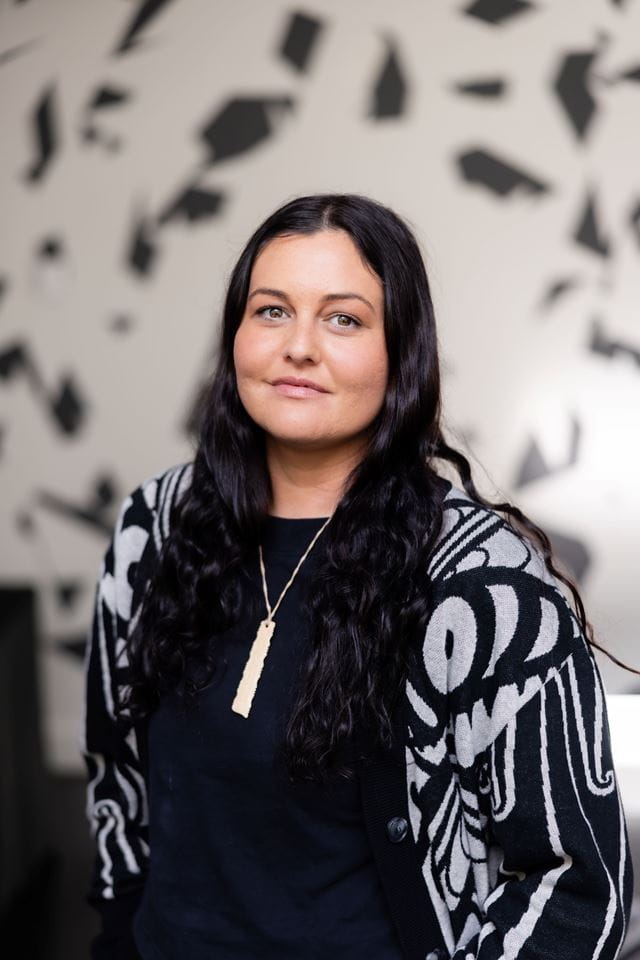
Fresh home from presenting her research at a medieval history conference in Europe, Dr Madi Williams is already back talking about the stories that matter most.
Not medieval England, where her love of history first began. But the stories of her own people.
The Christchurch-based historian and writer is one of eight writers recognised in this year's New Voices of Aotearoa, following the publication of Ngāti Kuia: He Pūtake, Hei Pakiaka Ora.
For Madi, the book became much more than a history of her iwi. It became a journey back to herself. "I didn't grow up at home," she says. "I didn't know this stuff intrinsically."
She says she learnt very little New Zealand history at school. It wasn't until university, studying history through a Māori and Indigenous lens, that she became deeply curious about her own whakapapa.
Her nana had spent years collecting the family's whakapapa, storing documents and records on an old computer. Madi would spend hours looking through them, knowing there was always something new to discover. "You can stare at the whakapapa for years and always find new things," she says.
Writing Ngāti Kuia: He Pūtake, Hei Pakiaka Ora became part of that journey.
For almost 10 years she researched, listened, learnt and slowly reconnected with her iwi. Along the way, she also wrestled with an unexpected question. "Who am I to be writing this iwi history?"
She says researching and writing the book became "a map home" for herself. "I was learning alongside the reader," she says. "It completely changed me. I feel a lot more grounded, a lot more connected, knowing who I am and where I'm from."
That journey is also why she wanted the book written in a way that anyone could understand.
Madi says she has always loved an underdog story. For her, Ngāti Kuia has often been left out of wider historical narratives. "I wanted our stories to be out there because they hadn't been told."
Being recognised as one of this year's New Voices of Aotearoa came as a complete surprise.
"I don't really see myself as a writer," she laughs. "I see myself as a researcher and a historian."
Standing alongside novelists and poets felt unexpected, but she says the recognition isn't really about her. "It's about the book. It's about platforming our stories and celebrating our iwi."
When asked what she hopes readers take away from Ngāti Kuia: He Pūtake, Hei Pakiaka Ora, her answer reaches well beyond Ngāti Kuia.
She hopes more iwi tell their own stories. "I hope we see more iwi histories coming out and all of our different perspectives," she says.
One of her proudest moments came when the first copies of the book arrived.
The same nana who had quietly gathered the family's whakapapa over many years was one of the first people she handed a copy to. "That was really exciting," she says.
She hopes Ngāti Kuia: He Pūtake, Hei Pakiaka Ora becomes a starting point for others to reconnect with their own whakapapa, and that more iwi histories continue to be written and shared.
Learn more about the 2026 New Voices of Aotearoa and this year's writers on the Coalition for Books website