


10 Jun 2026
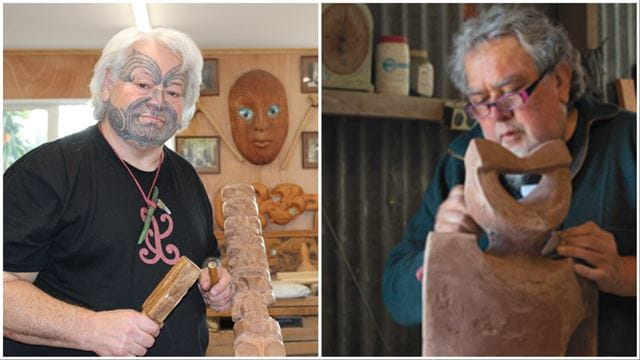
When Riki Manuel received the call telling him he would be recognised in this year's King's Birthday Honours, his first thought was that someone might be playing a joke.
"I had to double-check the calendar because I knew it was around April Fool's Day."
For Baye Riddell, the reaction was different, but the sentiment was much the same.
Neither man had spent a lifetime chasing recognition. In fact, both seem slightly more comfortable talking about their work, their communities and the people around them than they do about receiving national honours.
"I thought this was reserved for more important people than me," Manuel says.
Riddell is equally matter of fact. "I didn't do it to seek recognition. I've done it to make a living and because I enjoy it."
Yet between them, the two Ngāti Porou artists have spent decades helping shape Māori arts in Aotearoa. One through whakairo, tā moko and mentoring generations of artists. The other through uku, reconnecting people to whenua, whakapapa and cultural practice.
Neither set out to become celebrated artists, and neither knew whether the work would even pay the bills. There was simply a desire to create, a willingness to work hard, and a deep connection to culture, people and place.
This year, both men have been recognised for their contribution to Māori arts. Manuel was appointed a Companion of the New Zealand Order of Merit (CNZM), while Riddell was appointed an Officer of the New Zealand Order of Merit (ONZM).
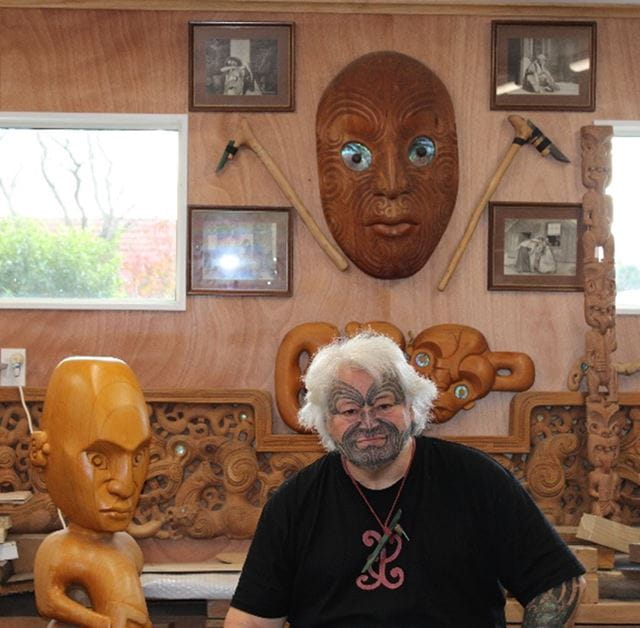
Riki Manuel: Helping others find their way
For Manuel (Ngāti Porou), that work was whakairo. After training at the New Zealand Māori Arts and Crafts Institute in Rotorua under master carvers Clive Fugill and John Taiapa, he returned to Christchurch in 1980.
It was a different time. There was little Māori arts activity in the city and few opportunities for Māori artists;. "I thought I might have to get a real job."
Instead, he bought a G-clamp from the local hardware store, clamped a piece of timber to the kitchen table and started carving. "That's how it started."
Within a year, he had secured his first major commission. More than four decades later, he has commissions booked through to 2029.
"The reason I kept going was because I wanted to. I wanted to get up every morning and do it."
He established training opportunities, mentored emerging artists and volunteered his time teaching in Kura Kaupapa and communities. Along the way, he opened Toi Mana Māori Gallery in Christchurch, helped promote Māori artists from around the country and became a founding member of Te Uhi ā Mataora, the national collective of tā moko artists.
One of the things he speaks most passionately about is helping others find their own path. Some of his proudest moments have come from seeing artists he once mentored go on to establish careers of their own. "You see people you've encouraged and mentored over the years now running their own studios, creating work, making a living and supporting their whānau through their art. That's satisfying."
While restoring historic carvings, Manuel discovered that some of his most influential teachers had been gone for more than a century. "I never thought I'd be taught by an ancestor who passed away 100 years ago," he says. By studying their work, he continues to learn from the knowledge, skill and whakaaro embedded in every carving. It's proof that great teachers can still guide us long after they have left this world.
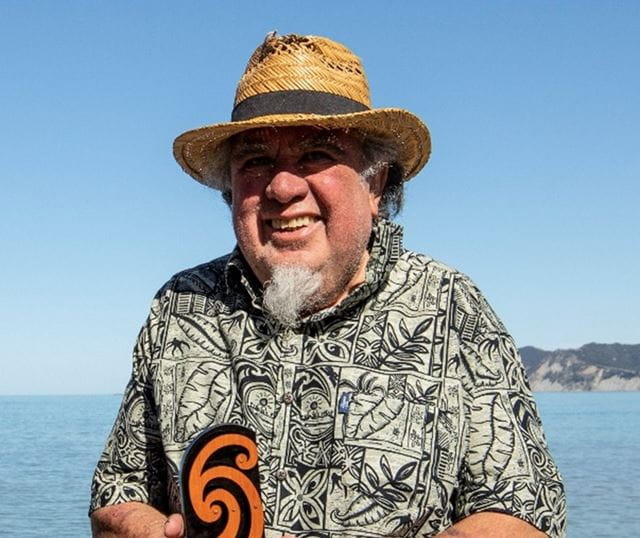
Baye Riddell: Clay, whenua and belonging
For Riddell (Ngāti Porou), the journey started with a return home. Living in Christchurch at the time, he was looking for a way to move back to the East Coast and become more self-sufficient.
The alternative lifestyle movement was growing, and many people were returning to the whenua.
Then one day, he watched a friend throwing clay on a wheel. "I was immediately captivated by it."
The attraction wasn't fame or recognition. At the time, he wasn't even thinking of himself as an artist. "I was making mugs, jugs, bowls and practical things. It was really about making a living."
What began as a practical way to support himself became a lifelong relationship with uku.
Working with clay became a way to reconnect with
whānau, memories, and the whenua he calls home. He speaks of time spent on family land, surrounded by memories of grandparents, aunties, uncles and cousins. "Working with clay brings back all those memories. That's what I mean by reconnecting."
For Riddell, uku is far more than a material; it is woven through Māori creation stories, whakapapa and cultural practice.
In 1986, he co-founded Ngā Kaihanga Uku, the national Māori clay workers' organisation, helping create opportunities for Māori ceramic artists and elevating the role of uku within contemporary Māori art practice.
He points to the story of Hineahuone, formed from clay by Tāne, and to the growing use of uku in contemporary Māori life, through ipu whenua, ceremonial vessels, marae settings, and everyday use. “It’s happening in a very organic way." Like tikanga itself, he believes uku continues to evolve alongside Māori communities.
While one found purpose through whakairo and teaching, and the other through uku and whenua, both men arrived at remarkably similar conclusions.
Neither pursued their craft for recognition, they simply followed the work they loved. Both speak about the importance of staying connected to culture, learning from others and sharing knowledge with the next generation.
Riddell encourages emerging artists to pursue what genuinely matters to them. "I feel sorry for people who get to the end of their lives without pursuing what truly matters to them."
Manuel's advice is equally simple. "Do what you do best."