


27 Mar 2026
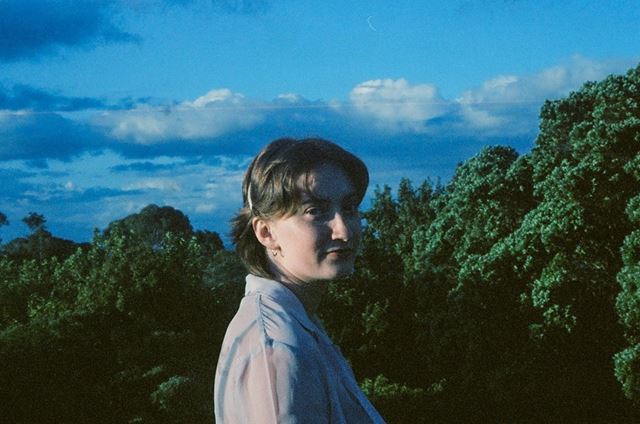
“The Edwin Carr scholarship really changed my trajectory…it was an opportunity to dedicate all of my time to music,” Jess Robinson.
Following the death of celebrated New Zealand composer Edwin Carr MNZM in 2003, the Edwin Carr Foundation was established in 2004. For 22 years, the proceeds of Edwin’s estate have been used to support emerging composers from Aotearoa to study overseas. This creates a vital pathway into a professional career, at a time when funding opportunities for composers are increasingly limited.
To be eligible for the Edwin Carr Scholarship, you must be a composer, a NZ citizen or permanent resident and have a track record of experience of success in your artform. Applications for this scholarship close 1 April.
Sound artist, composer and acoustic engineer Jess Robinson (Tāmaki Makaurau) is one of the scholarship’s recent recipients. After completing studies in composition and mechatronics engineering at the University of Auckland, Jess is currently undertaking a Master of Computer Music and Sound Art (Computermusik und Klangkunst, meaning sound art) in Graz, Austria.
As options to fund the development of young musicians and composers become more constrained, Jess’s story highlights the transformative role long-term scholarships play not just in enabling study, but in allowing artists the time, focus and space to develop a sustainable creative practice.
Finding music and community in Austria
Jess’ musical journey began at primary school. Although her parents were not musicians, they “loved listening to rock music together blasting in the car on a road trip or jamming in the louge on a Sunday.” As a tween, she learned cello at Papakura Music School’s Saturday morning classes. In high school, she learned guitar and trumpet and started going to indie gigs around Tāmaki. She slowly found her way to experimental and improvised music.
“Finding new artists on Record Store Day and at other events around the city was always super inspiring, and hanging out around 95bfm and Audio Foundation was super formative in my journey. I am so grateful to all of the musicians and artists that have shared their sounds/kōrero/guidance with me along the way,” she says.
Studying sound abroad
The Computermusik and Klangkunst (sound art) program in the world heritage city of Graz, Austria appealed to Jess because of its breadth and scope.
Experimental music differs from conventional music in a number of ways.
“[It] ranges from live electronic performance to spatial composition, to installation work, all with a deep technical and artistic lens. I have really enjoyed being presented with so many practices and developing my voice within these fields.”
Studying in Graz and being able to travel within Europe had given Jess a broader perspective on music and sound art in different contexts and cultures.
“Having some guidance from real experts/nerds in the Computer Music field has been so valuable to developing my practice not only with technical skills, but also in artistic angles and approaches.”
Experimentation, collaboration and practice
The program offers students the freedom to explore different interests. In her classes, Jess has built a DIY analogue synthesiser, performed real-time spatialisation with an acousmonium-style (an orchestra of loudspeakers designed for immersive sound projects) setup, and collaborated with a contemporary opera singer to develop a new work.
“A recent project has been building a system and piece with feedback inside the body of my cello and inside my mouth. Some experiments with this have been released as part of the Halffloor project!”
She describes Graz as a place with a deeply supportive and inspiring artistic community.
“My flatmates and classmates were the founding members of CMKK, a rhizomatic collective of computer musicians and sound artists working in Graz and organising concerts and installations. It has been amazing to see how a community can pull off these incredible events by pooling time, skills and resources to make things happen. It feels very connected to our DIY spirit in Aotearoa! Generally, it feels like there are always interesting events happening here with very open audiences!”
In her first week of classes, Jess experienced an outdoor spatial sound installation, Weis/Weisslich 27d by the late Peter Ablinger, realised with Winfried Ritsch. In the installation,12 loudspeakers formed a large circle in a courtyard, each playing white noise that had been filtered to one note.
“Standing in the middle of the circle, you could hear only white noise - but by moving around you could create glissandi and melodies with your movements. This work really opened my mind to the possibilities for unique and personal experiences that can be facilitated with installation works.”
Jess has recently been experimenting with free improvisation (with cello, electronics and DIY setups) with local musicians.
“I really value building connections through sound in this way. Performance is an important aspect of my practice, so I am interested in developing the way that I communicate with others when using electronics or other setups.”
Supporting a thriving music community
Jess thinks the most important part of having a thriving music community is showing up to local gigs/concerts.
“We really have the most incredible and unique music happening in Aotearoa, and it is a shame that a lot of people never get to experience the joy of paying $10 to see the most mind-bending gig ever with 15 other people. And it isn’t so hard to find something new to go to - we are very lucky to have resources like Undertheradar and the student radio stations consolidating all the information! Even if you don’t have any money, there are still lots of amazing free things happening! Overall, I think the most important thing is to show up - give your ears and time to understand the ecosystem.”
She says that community-building will always be the key to building a sustainable practice.
“Getting to know the paths other artists have taken, and what support is out there, is super valuable. Then you can do this for others and build a stronger, more resilient community. Also, value your time, your skills and your creativity.”
How to support the next generation of musicians and composers?
If you are interested in contributing to Creative New Zealand’s Music Scholarships as a patron, please renee.casserly@creativenz.govt.nz
Long term support such as donations, patronage and bequests can make a transformational difference, creating stable funds that allow future artists to thrive.
Find out more
To learn about the Jack McGill Scholarship and other opportunities for musicians, see here.
See Arts crowdfunding platform, Boosted, for opportunities to support artists